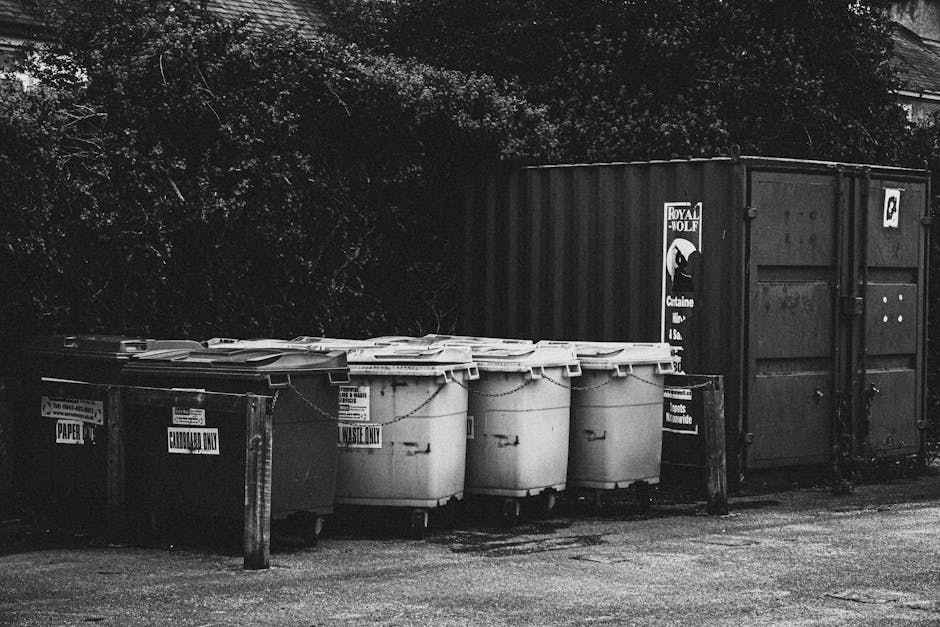
Estate access problems for bulky waste in Poplar solved
If you've ever tried to move a sofa, mattress, wardrobe, or a pile of old office furniture through a tight estate walkway in Poplar, you'll know the problem is rarely the item itself. It's the turns, the parked cars, the narrow stairwells, the locked gates, the shared corridors, and that awkward "How on earth do we get this out?" moment. This guide to estate access problems for bulky waste in Poplar solved is here to make the process feel less stressful and a lot more manageable.
In plain English: if bulky waste is stuck because the estate layout is awkward, the right plan matters more than brute force. You need access checks, safe handling, sensible timing, and a removal approach that suits flats, maisonettes, blocks, and busy communal spaces. Let's walk through what works, what to avoid, and how to get the job done without turning a simple clearance into a headache.
Table of Contents
- Why Estate access problems for bulky waste in Poplar solved Matters
- How Estate access problems for bulky waste in Poplar solved Works
- Key Benefits and Practical Advantages
- Who This Is For and When It Makes Sense
- Step-by-Step Guidance
- Expert Tips for Better Results
- Common Mistakes to Avoid
- Tools, Resources and Recommendations
- Law, Compliance, Standards, or Best Practice
- Options, Methods, or Comparison Table
- Case Study or Real-World Example
- Practical Checklist
- Conclusion
- Frequently Asked Questions
Why Estate access problems for bulky waste in Poplar solved Matters
Estate access sounds like a small issue until you're standing outside a block with a bulky item that will not fit through the obvious route. In Poplar, many homes and managed estates have a mix of older layouts, shared entrances, tight staircases, lift restrictions, concierge rules, and internal pathways that are not really designed for oversized waste. That's where the trouble starts.
Bulky waste is usually straightforward in theory. A mattress needs to go. A broken wardrobe needs to come out. A worn-out sofa has reached the end of the road. But the estate environment changes everything. You may have limited parking, restricted loading zones, no lift access at the right time, or communal rules about moving waste through shared areas. A simple collection can become a long, awkward shuffle if you do not plan the access properly.
It matters because poor access planning can lead to:
- damaged walls, doors, or flooring
- blocked corridors and nuisance to neighbours
- missed collections and wasted time
- unsafe lifting or carrying
- extra trips, extra labour, and extra stress
To be fair, most people only discover the access issue on the day. That's normal. The good news is it can usually be solved with a proper pre-check, a realistic route plan, and a clearance method that matches the estate rather than forcing the estate to match the waste.
For related clearances where furniture or household items need to be removed as part of a bigger job, it can help to look at house clearance options or the more focused furniture disposal service if the main issue is one or two bulky items.
How Estate access problems for bulky waste in Poplar solved Works
The solution is less about "lifting harder" and more about "planning better." In most cases, an effective bulky waste removal on an estate follows a simple chain: assess access, choose the right approach, protect the route, move the item safely, and clear any final residue quickly.
Here's the practical version.
1. Check the route before moving anything
Start with the full path from the item to the vehicle. Not just the front door. The real route. Ask yourself: can the item fit through the hallway? Will the lift take the weight or size? Are there low ceilings, sharp turns, or doors that swing the wrong way? Small details matter more than people think.
A bulky cupboard that looks manageable in a flat can become awkward at the stairwell landing. A sofa may be perfectly fine in the room but impossible through a narrow communal doorway unless it is angled just right. Sometimes it's not a "big waste" issue at all; it's a geometry issue. And geometry, annoyingly, always wins.
2. Match the removal method to the estate
If access is limited, the best approach may be a two-person lift, a staggered carry down stairs, dismantling the item, or scheduling a collection at a quieter time. In some estates, the route works best if the item is broken down first. In others, it's safer and faster to remove it whole.
This is where experience matters. Not every bulky item should be forced through every route. A professional waste team will usually decide whether the job needs flat-pack disassembly, extra protection for communal areas, or a smaller loading strategy to avoid delays.
3. Protect shared spaces
Estate access often means using shared hallways, lifts, lobbies, and exterior walkways. That means protecting those spaces matters. Blankets, edge protection, and careful carry technique can prevent scuffs and chipped paint. It also reduces friction with neighbours and building management, which, let's face it, is always worth keeping on side.
4. Move at the right time
Timing can be the difference between a calm removal and a chaotic one. Early mornings may be quieter. Mid-afternoon may be easier for vehicle access. A managed block may have specific moving windows. In Poplar, where streets and estates can be busy, it's often best to avoid peak congestion where possible.
5. Load efficiently and sort correctly
Once the bulky waste is out, it should be loaded in a way that keeps the area clear and supports proper sorting. Not every item is treated the same. Some furniture can be reused, some material can be diverted for recycling, and some waste needs to be handled as general disposal. If the items are part of a wider clear-out, browsing waste removal solutions can help you see how the wider service fits together.
Key Benefits and Practical Advantages
Solving estate access problems properly is not just about convenience. It changes the whole experience for residents, landlords, managers, and anyone trying to clear bulky waste without drama.
- Less risk of damage: Tight corners and shared entrances are exactly where scratches happen. A planned route reduces that risk.
- Fewer delays: A good access plan prevents that awkward situation where the team arrives and then spends half the booking just figuring out the lift.
- Better neighbour relations: No one enjoys a corridor full of furniture on a Tuesday afternoon.
- Safer lifting: Planning helps avoid rushed carries, overreaching, and unnecessary strain.
- More cost-effective: When access is understood in advance, the job is less likely to need repeat visits or extra handling.
- Cleaner finish: The route out is left tidier and the estate does not feel like a construction site afterwards.
There's also a less obvious benefit: confidence. Once you know the access problem has been thought through, the whole task feels less overwhelming. That matters a lot when you're dealing with bulky waste in a lived-in building where people still need to get in and out all day.
Who This Is For and When It Makes Sense
This sort of access-aware bulky waste clearance is useful for anyone dealing with estate living or managed residential blocks in Poplar. It is especially relevant if the waste is awkwardly sized or the building has limited space.
Common situations include:
- tenants clearing out after a move
- landlords preparing a flat for re-let
- estate managers dealing with abandoned bulky items
- families clearing a property after a long period of storage
- people replacing old furniture in a flat or maisonette
- offices or small businesses moving large items out of shared premises
It also makes sense when you know access is going to be the main barrier, not the volume of waste. One sofa in the wrong stairwell can be harder to deal with than a room full of smaller items. Strange but true.
If the job is inside a flat, the flat clearance service may be more appropriate than a general clearance. If it involves multiple rooms, consider home clearance or house clearance depending on the size of the property and how much needs removing.
Step-by-Step Guidance
If you want a smooth result, use a sequence instead of guessing on the day. Here's a practical way to handle bulky waste access on an estate.
- Identify the exact items. List every bulky item, including size, weight, and whether it can be dismantled.
- Map the access route. Check doors, stairs, lifts, corridors, and outdoor paths from the item to the vehicle.
- Check estate rules. Look at any restrictions on parking, loading, lift use, or moving times.
- Remove obstacles first. Move small objects, rugs, bikes, plant pots, or anything else that could trip someone up.
- Protect sensitive surfaces. Use coverings where the route is tight or the walls are easily marked.
- Choose the safest removal method. Whole item, dismantled item, or staged carry? Pick the one that fits the building.
- Brief everyone involved. A quick plan saves time. Who leads? Which exit is best? Where will items be loaded?
- Clear the final area. Sweep up loose debris, check for missed fixings, and leave communal spaces neat.
If the waste is tied to a renovation or light building job, you may need to think beyond furniture and look at builders waste clearance as well. Mixed waste changes the handling plan, especially where access is tight and you do not want multiple collections.
Expert Tips for Better Results
In our experience, the easiest jobs are the ones where the access details are discussed before anyone starts lifting. That sounds obvious, but it gets skipped more often than you'd think.
- Measure the awkward points, not just the item. Door widths, landing turns, and lift dimensions are often the real problem.
- Photograph the route. A few pictures of the hallway, stairwell, and item can help everyone judge the plan more accurately.
- Think in sections. If the item can be dismantled safely, that may save more time than trying to force a single carry.
- Leave space near the exit. A clutter-free staging point makes the final lift much smoother.
- Keep the loading point realistic. On a busy estate, the nearest legal parking spot is not always the easiest one. Better to know that early.
- Watch for peak resident movement. School run times, commuter periods, and delivery windows can all make access worse.
A small aside: the smartest bulky waste job is usually the one that looks a bit boring from the outside. No drama, no heroic last-minute wrestling, no shouting up the stairwell. Just a calm plan and a tidy exit.
For residents who want reassurance around how items are handled once they leave the property, the company's recycling and sustainability approach is worth understanding, because it helps explain what happens after collection.
Common Mistakes to Avoid
Most access problems become worse because of a few avoidable mistakes. The good news? They're easy to spot once you know what to look for.
- Ignoring the route: People focus on the item and forget the corridor, stairs, and corners.
- Not checking lift suitability: A lift that opens wide enough may still not be suitable for weight or shape.
- Leaving it until the last minute: If the route is tricky, the job needs a plan, not a rushed guess.
- Assuming every item can be carried whole: Some items are simply better dismantled first.
- Blocking communal access: This causes friction fast, especially in busy blocks.
- Underestimating the awkward bits: One stair turn or low doorway can change the whole operation.
Another common mistake is booking a generic removal when the estate access makes the job more specialised. If the task includes storage spaces, cluttered communal areas, or a mix of household goods, a broader garage clearance or loft clearance approach may be more sensible, depending on where the items are coming from.
Tools, Resources and Recommendations
You do not need a van full of fancy kit to solve most access problems, but a few basic tools and habits make life easier.
| Tool or resource | Why it helps | Best used for |
|---|---|---|
| Measuring tape | Checks whether items and openings are actually compatible | Doors, stair turns, lift spaces |
| Camera phone | Lets you share route details clearly | Pre-checks and planning |
| Protective covers | Reduces scuffs in shared spaces | Hallways, lifts, corners |
| Basic tools for dismantling | Helps break down oversized furniture safely | Wardrobes, bed frames, large shelving |
| Clear route plan | Keeps everyone on the same page | Any estate collection |
If you are comparing service options or trying to understand what affects price, the pricing and quotes page can be helpful for setting expectations before you book. And if the question is who is handling the job, the about us page gives a better feel for the company behind the service.
There's no magic gadget that solves every access issue, by the way. Good judgment still beats clever gear most days.
Law, Compliance, Standards, or Best Practice
With bulky waste on estates, compliance is mainly about safety, responsibility, and respect for shared spaces. You do not need to overcomplicate it, but you do need to get the basics right.
In the UK, the practical expectations are usually simple: waste should be handled responsibly, moved safely, and taken to appropriate facilities. For managed estates, there may also be building rules, lease conditions, or site-specific access arrangements that need to be followed. Those rules vary, so it is sensible to check them rather than assume.
Best practice usually includes:
- planning the route before moving items
- avoiding obstruction of fire exits and communal passages
- using safe lifting methods and enough people for the weight and size involved
- protecting surfaces where damage is likely
- sorting waste properly for disposal or reuse
- keeping the site tidy once the clearance is complete
If you are dealing with commercial premises in or around an estate, the same principles apply, but with more emphasis on timing, access windows, and minimising disruption. For that kind of work, business waste removal and office clearance are the more relevant service pages to explore.
Insurance and safety also matter in the real world. If a job involves tight access, heavy lifting, or shared circulation space, knowing the service is backed by proper insurance and safety arrangements gives you an extra layer of reassurance. That's not fluff. It's practical peace of mind.
Options, Methods, or Comparison Table
There is more than one way to solve estate access problems for bulky waste. The best method depends on the item, the building, and how urgent the clearance is.
| Method | Best for | Advantages | Limitations |
|---|---|---|---|
| Whole-item removal | Large items with clear access | Fast and simple | Not suitable for narrow routes |
| Dismantling first | Wardrobes, bed frames, shelving | Makes awkward items manageable | Needs tools and extra time |
| Two-person carry | Heavy items with reasonable access | Safer than solo handling | Still depends on route width |
| Staged removal | Complex estates or multiple items | Reduces congestion | Can take longer overall |
| Full clearance approach | Multiple rooms or mixed waste | Efficient for bigger jobs | May be more than you need for one item |
For a single sofa or mattress, the simpler method often wins. For a cluttered flat, a more complete clearance can be far easier than trying to solve one item at a time. If the property is being emptied more broadly, furniture clearance can sit neatly alongside the estate access plan.
Case Study or Real-World Example
Picture a flat on a Poplar estate with a bulky wardrobe needing removal. The wardrobe is too wide for the lift once it's fully assembled, and the stairwell has a tight landing. The resident has been putting it off for weeks because every plan seemed to fall apart the moment the dimensions were checked.
What usually works in a situation like this is a calm reset. First, the wardrobe is measured. Then the route is checked from the bedroom to the exit. A quick look shows the hinges and top panels can be removed safely, which turns the job from awkward to manageable. The communal corridor is protected, the item is moved in sections, and the exit is kept clear for other residents. Simple enough, but only because the access was treated as part of the job, not an afterthought.
That kind of scenario happens all the time. Sometimes the problem is not the waste. It's the space around it.
Another common example is a flat clearance after tenancy turnover. There might be a mattress, dining table, broken desk, and a few chairs waiting near the front door. If the estate gate is narrow and parking is restricted, the route plan matters just as much as the loading plan. In that case, a combination of flat clearance and sensible furniture handling can save a lot of back-and-forth.
Practical Checklist
Use this before any bulky waste collection on an estate. It keeps things grounded.
- Have I measured the item accurately?
- Have I checked door widths, stair turns, lift size, and corridor space?
- Do I know the best exit route?
- Are there any estate rules, gate codes, or parking limits to follow?
- Can the item be dismantled safely?
- Are shared spaces protected where needed?
- Have I cleared the route of trip hazards and loose items?
- Is the collection time sensible for residents and access?
- Do I need a broader clearance service rather than a one-item collection?
- Have I confirmed what happens to the waste after removal?
If you can tick most of those off, you're already ahead of the game.
Conclusion
Estate access problems do not have to turn bulky waste removal in Poplar into a long, frustrating ordeal. With the right route check, the right handling method, and a bit of common sense about shared spaces, the job becomes much easier. The main thing is not to guess. Measure, plan, and choose the approach that suits the building rather than fighting against it.
That is really the heart of Estate access problems for bulky waste in Poplar solved: less stress, fewer mistakes, safer moving, and a cleaner finish for everyone involved. Whether you're clearing one awkward item or dealing with a full flat, the same principle holds true. Good access planning saves time, money, and a fair bit of frustration too.
Get a free quote today and see how much you can save.
And if you are still staring at that bulky item thinking, "How is this going to work?" - fair question. It usually works better than expected once the access is properly mapped out.
Frequently Asked Questions
What are estate access problems for bulky waste in Poplar?
They are the practical barriers that make it hard to remove large items from flats, maisonettes, or managed blocks. Common issues include narrow hallways, stairs, small lifts, locked gates, parking limits, and shared areas that need protection.
Can bulky waste be removed from a flat if the lift is too small?
Yes, often it can. The item may need to be dismantled, carried by two people, or moved through a different route. The right method depends on the size of the item and the layout of the building.
Do I need to measure the item before booking?
It helps a lot. Measuring the item and the tight points along the route makes planning much easier and reduces the chance of a failed collection or damaged walls.
What if the estate has parking restrictions?
That needs to be factored in before the collection day. A clear loading plan helps avoid delays. Sometimes the timing of the job matters just as much as the route itself.
Is it better to remove bulky furniture whole or dismantle it?
It depends on the access. Whole removal is faster when space allows, but dismantling is often the safer choice in tight stairwells, small lifts, or narrow communal corridors.
Can you clear more than one bulky item at the same time?
Yes, and that is often the most efficient approach. If you have several pieces of furniture, a broader furniture clearance or house clearance style job may make more sense than handling each item separately.
What happens if the access route is blocked on the day?
The removal may be delayed until the route is made safe and clear. That is one reason why a pre-check is so useful. It avoids last-minute surprises, which nobody enjoys.
Are communal areas protected during bulky waste removal?
They should be. Good practice is to protect walls, floors, corners, and other shared surfaces where there is a risk of scuffs or marks. It keeps the job tidy and respectful.
Does bulky waste removal on an estate need special handling?
Sometimes, yes. Tight access, resident safety, and building rules can make the job more complex than a standard roadside collection. That is why a planned approach usually works best.
What if I'm clearing an office or business unit on an estate?
Then the same access rules apply, but you may also need to consider working hours, loading limits, and disruption to neighbours or other tenants. In those cases, business waste removal or office clearance is often the right starting point.
How do I know which service is right for my situation?
Think about what you are removing and where it is coming from. A single item may only need furniture disposal, while a flat full of items may be better suited to flat clearance or home clearance. The layout of the building matters too.
What is the best next step if I'm unsure about access?
Start by checking the item size, the route out, and any estate restrictions. If it still looks awkward, ask for a quote and explain the access issue clearly. That simple detail can save a lot of back-and-forth later.